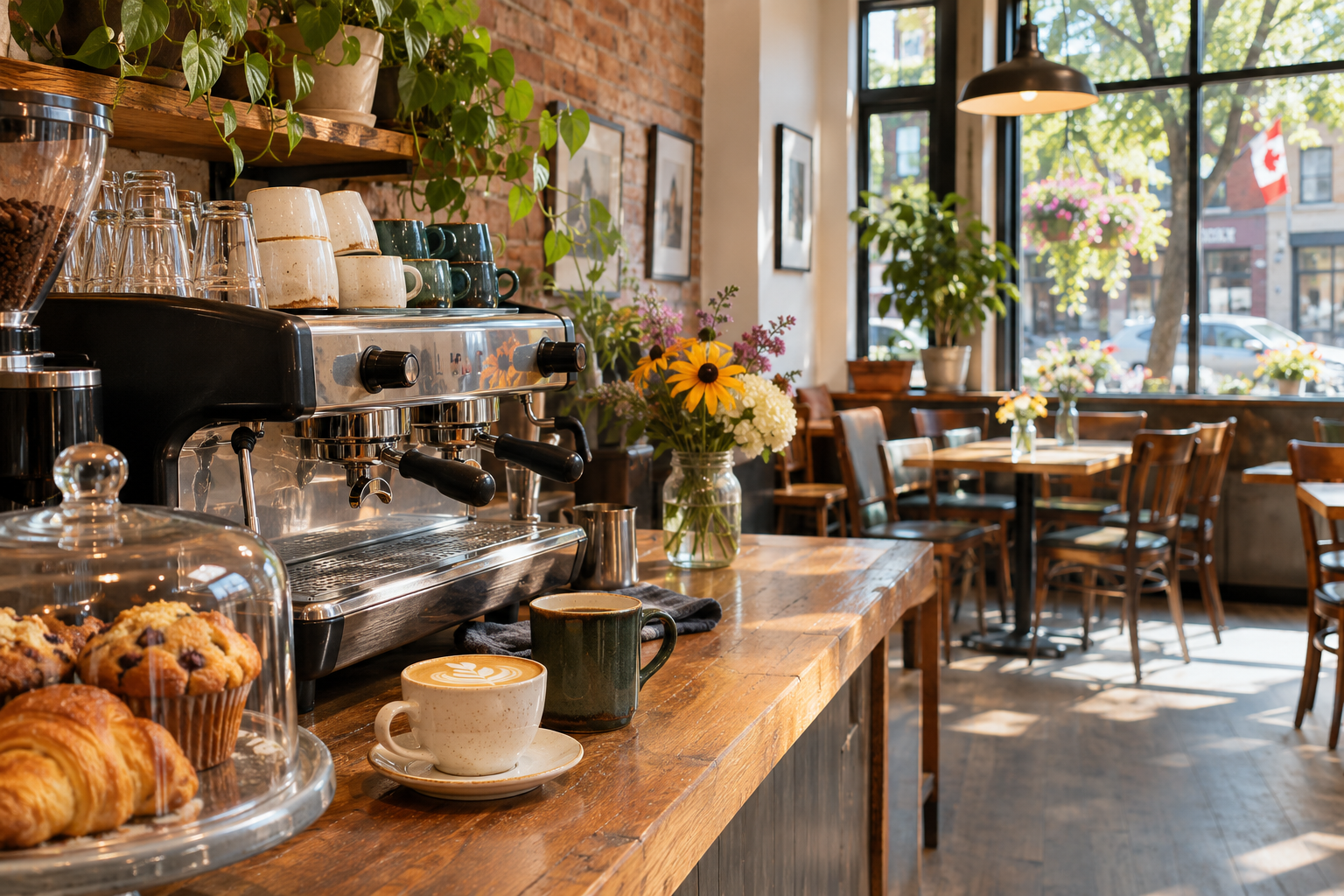
An espresso machine stops mid-service, a customer slips beside the collection counter, or a leaking pipe damages the café you lease. Each incident creates a different insurance question. Coffee shop insurance should reflect the business behind the counter: the equipment you depend on, the food you sell, the premises you occupy and the way customers use the space.
For an Ontario café owner, a useful review starts with an ordinary working day. Follow the first delivery, preparation, morning rush and closing routine. Identify what belongs to you, what belongs to someone else and what would stop sales. That description gives a broker a stronger starting point than simply calling the business a small restaurant.
Describe your café accurately
Explain whether you serve only drinks and packaged snacks or prepare meals, bake, fry or cook on site. Include seating, hours, patios, events and takeaway service. A coffee kiosk in another business has different responsibilities from a standalone café with a kitchen and several employees. Tell the broker about shared spaces and any concessions you operate.
Describe future changes before making them. Adding evening events, alcohol, wholesale baking or delivery can change the operation presented to the insurer. Keep a short record of new activities and ask when approval or updated information is required. An annual renewal questionnaire should not be the first time a significant expansion is mentioned.
Separate customer liability from your own property
Commercial general liability can address covered claims alleging injury or damage to others arising from your business. Property insurance concerns your own insured assets. If someone alleges a burn from a drink, that raises a different issue from replacing your damaged espresso machine. Ask how the relevant coverage responds rather than assuming one limit addresses both.
Discuss food products, customer seating and off-site activities specifically. Keep incident records factual and follow reporting instructions. Staff should know whom to contact and should avoid promising a settlement before the insurer reviews an allegation. A complaint can require investigation even when the manager believes the café did nothing wrong.
List the equipment needed to reopen
Create an inventory of the espresso machine, grinders, brewers, refrigeration, ovens, point-of-sale terminals, furniture and signs. Include installation and other relevant replacement costs when discussing values. Separate leased machines and supplier-owned displays from property you own. Review the agreements to establish who must insure or replace each item.
Do not use the remaining balance on a loan as the automatic insurance value. Ask how the policy calculates settlement and whether insurance-to-value conditions apply. Keep invoices and photographs outside the premises. If the café becomes inaccessible, those records should still be available to the owner and adjuster.
Ask about breakdown and spoiled stock
A machine can stop working without being damaged by fire or another external event. Ask about equipment breakdown and which mechanical or electrical failures are addressed. Routine maintenance, wear and known defects should not be confused with an insured breakdown. Review warranties and service contracts separately.
Milk, prepared food and other refrigerated stock need their own discussion. Ask whether resulting spoilage is covered, which limit applies and how a utility outage away from the café is treated. Establish who receives an overnight refrigeration alarm and what records staff should preserve if stock must be discarded.
Read the lease before choosing limits
A landlord’s building policy does not automatically insure your contents, improvements or liabilities. Give the broker the lease and identify insurance requirements, damage responsibilities and requests to add the landlord as an additional insured. Obtain legal advice for obligations beyond the insurance wording.
Clarify counters, plumbing alterations, fitted furniture and improvements installed by a previous tenant. Ownership and repair responsibility can differ. Ask how tenants’ legal liability and insurance on improvements fit together, because damage to your own fittings and liability for damage to the landlord’s property are separate questions.
Plan for a temporary closure
After a serious covered loss, rent and other expenses may continue while equipment is ordered and repairs are completed. Ask what triggers business interruption, how the financial loss is calculated and how long protection can continue. A general fall in sales or every reason for closing is not automatically insured.
Use a realistic reopening timeline. A specialist espresso machine may have a different replacement lead time from ordinary furniture. Ask about covered extra expenses and any approval requirements. Keep sales and expense records organized, and maintain working capital for retained costs and the period while a claim is assessed.
Include delivery, events and online orders
If employees deliver food or supplies, explain who owns the vehicles and how they are used. Personal auto insurance and a delivery platform’s arrangements should not be assumed to protect every exposure. Ask which commercial auto or non-owned vehicle questions apply before introducing the service.
Off-site markets and private events can involve equipment in transit, temporary premises and venue contracts. Online orders create payment and information dependencies as well. Describe these activities so cyber, crime and portable property options can be considered where relevant, rather than attaching every new service to an unchanged café description.
Compare the proposal against a short checklist
- Correct legal business, location, hours and services.
- Current contents and improvement values.
- Customer and product liability terms and limits.
- Breakdown, spoilage and interruption arrangements.
- Delivery, off-site equipment and event activities.
- Deductibles, exclusions and outstanding insurer requirements.
Ask for explanations of material differences between quotes in writing. A lower premium may reflect a different deductible or an omitted protection. Choose using the effect on your café’s cash flow and ability to recover, not only the annual total. Review the arrangement again after substantial equipment purchases or a change in premises.
Prepare a café-specific insurance conversation
Bring the lease, equipment list, sales information and a description of your busiest service period. Explain how many people work at once, which appliances are essential and whether another business shares the kitchen. Specific facts help turn a broad insurance quotation into a practical discussion about the risks you want to transfer and those you can retain.
Continue your coverage review
For the wider picture, read our hospitality insurance guide. Review Machinery Insurance for Commercial Kitchens: Breakdown and Repair Questions and Review Commercial Tenant Insurance for Restaurants: What Your Lease Leaves to You.
Explore Sterling’s restaurant insurance options or request a quote based on your operations.
General information only. Coverage depends on policy wording, exclusions, conditions and underwriting approval. Illustration generated for this article.