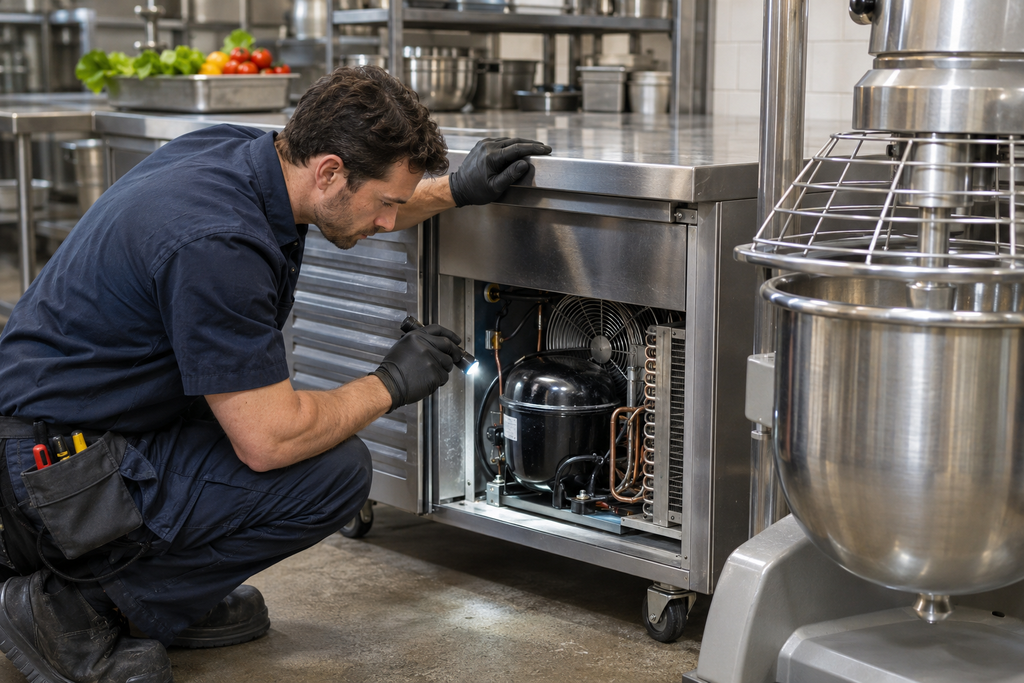
A commercial kitchen can stop trading when one refrigeration, electrical or preparation system fails. Machinery insurance is often searched as a broad term, but the practical insurance discussion is usually about equipment breakdown and the exact machinery, failures and resulting losses addressed by the wording. It should be kept distinct from ordinary maintenance and external property damage.
For a restaurant, café or food producer, begin by identifying the systems that matter most to service. Ask what would happen if each failed, how quickly it could be repaired and whether stock or income would also be affected. That exercise helps turn a general coverage name into questions about your actual equipment.
Distinguish the reason equipment stopped
A machine may be damaged by a fire, dropped during transport, stolen or affected by an internal mechanical or electrical failure. Different causes can lead to different insurance treatment. Ask which policy section or separate arrangement addresses each relevant event rather than assuming every repair belongs to breakdown cover.
Describe symptoms and retain a qualified service assessment after an incident. Avoid deciding the technical cause from a brief observation. The insurer may need evidence to distinguish an insured breakdown from wear, a known defect, installation issues or another excluded circumstance.
List the machinery and its dependencies
Prepare a schedule of refrigeration, freezers, mixers, ovens, ventilation interests, boilers, electrical systems and other critical equipment. Identify ownership, age, service provider and available records. Ask whether the proposed breakdown arrangement includes the relevant classes of equipment or requires specific details.
Look beyond the appliance doing the visible work. A control panel, compressor or electrical supply issue may stop several systems at once. Explain those dependencies to the broker and service adviser. The effect on production can be much larger than the price of the failed component.
Review what the breakdown wording promises
Ask for a plain-language explanation of the insured event, exclusions, deductibles and limits. Check whether repair or replacement, associated expenses and specialist services are addressed. Do not treat a short quotation label as a substitute for the actual wording and endorsements.
Use an example such as a refrigerator compressor failing during a busy period. Which costs concern the unit, which concern its contents and which concern lost trading? Ask each separately. A positive answer about repairing the machine does not automatically establish protection for every resulting expense.
Keep maintenance and warranties separate
Service contracts and warranties can provide assistance for particular faults, while insurance addresses specified insured losses. Ask how these arrangements interact without assuming one replaces the other. Routine servicing, worn parts and planned upgrades remain expenses that need operational budgeting.
Keep maintenance records and outstanding recommendations organized. If a contractor identifies a defect, follow it up appropriately and disclose relevant information requested by the insurer. Insurance should not be viewed as permission to continue using unsafe or unreliable equipment while postponing necessary work.
Discuss spoilage and temperature-sensitive stock
Food stock can be damaged while the refrigeration unit itself is awaiting repair. Ask whether spoilage protection is included, which causes trigger it and whether a separate limit applies. Review the treatment of temperature variation, monitoring and evidence under the proposed arrangement.
Maintain suitable food safety procedures and a response process for alarms. Record affected quantities, temperatures and disposal information where appropriate. Safety obligations and the decision to remove unsafe food should remain separate from the insurer’s later assessment of cause and coverage.
Check external utility interruption
A restaurant can lose power because of an event outside the premises rather than a breakdown of its own machinery. Ask whether the insurance includes relevant utility interruption protection and what conditions apply. Causes, waiting periods and the property involved can matter under different wordings.
Explain reliance on electrical, gas, water or other services relevant to the operation. Discuss realistic backup arrangements with qualified advisers. A generator or temporary system introduces its own equipment and safety questions, so review it before relying on it as the business’s recovery solution.
Review income loss and extra expense
Breakdown repair and business interruption are different parts of recovery. Ask how financial protection connects to the qualifying equipment event, which losses are assessed and how long cover may continue. A lost evening of trade is not automatically reimbursed simply because repair costs are insured.
Estimate replacement lead times and alternatives. Could a machine be hired, production moved or the menu temporarily reduced? Ask what approvals and limits apply to extra expenses. Keep financial records and working capital for retained costs and the time while a reported claim is investigated.
Clarify landlord and rental equipment
In leased premises, essential systems may belong to a landlord or another company. Identify who owns, maintains and must replace each item. Give the broker the agreement and ask how your stock and income exposures are addressed if someone else’s equipment fails.
Rented machinery used for a temporary event also needs review. The rental agreement may impose responsibilities that differ from your own policy. Ask about damage, breakdown and substitute costs before accepting the equipment, and keep ownership and insurance evidence with the event file.
Prepare for an incident before service
Keep insurer reporting contacts and qualified repair contacts accessible to the manager on duty. After a suspected failure, prioritize safety, preserve facts and ask about approval requirements before major non-emergency work or disposal of damaged components. Record when the problem was discovered and how operations changed.
Separate repair invoices, stock losses and additional operating expenses. Retain technical findings and communications. This makes the record easier to assess and helps the business avoid treating all costs as one unexplained total submitted after reopening.
Use a machinery review checklist
- Critical systems, ownership and current values.
- Insured failure definitions and relevant exclusions.
- Maintenance, warranty and service responsibilities.
- Spoilage, utility and financial-loss extensions.
- Deductibles, limits and approval requirements.
- Repair contacts, records and temporary alternatives.
Review the checklist after new equipment, a kitchen redesign or a change in production. Ask for material differences between proposals in writing. The aim is a clear distinction between insured breakdowns, other property losses and the maintenance costs the food business must plan to retain.
Continue your coverage review
For the wider picture, read our hospitality insurance guide. Review Business Equipment Insurance for Food Businesses: Contents, Transit and Values and Review Business Interruption Insurance for Restaurants: Income, Triggers and Recovery.
Explore Sterling’s restaurant insurance options or request a quote based on your operations.
General information only. Coverage depends on policy wording, exclusions, conditions and underwriting approval. Illustration generated for this article.