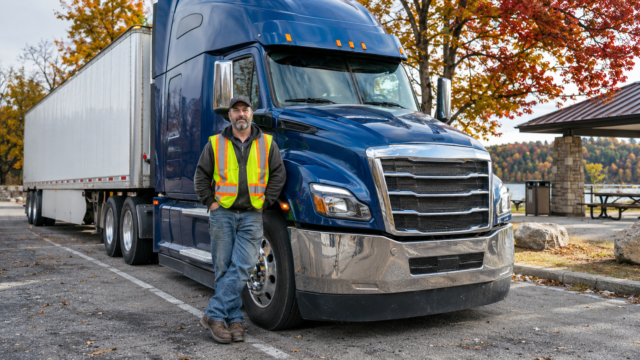
As an owner-operator, your truck is both an expensive piece of equipment and the tool that earns your income. Whether you work under your own authority or lease your truck to a carrier, knowing who insures each part of the operation can help prevent an unpleasant surprise after a claim.
Owner-operator truck insurance is not a single standard package. Your contract, vehicles, freight and routes determine which coverage you need to arrange. Start by reviewing your lease agreement and the carrier’s insurance documents with a broker.
What insurance does an owner-operator need?
The answer depends on whether you operate independently or under another carrier’s authority. An independently operated business generally needs to arrange coverage for its own operation. A leased owner-operator may receive some protection through the carrier, but should not assume that every trip, driver, trailer or loss is included.
Ask for the actual coverage details, not only a verbal assurance. Check who is named as an insured, the vehicles listed, the activities covered and the limits and deductibles. Your contract may also set out who pays a deductible or is responsible for damage.
Commercial auto liability
Commercial auto liability can respond to eligible claims for injury or property damage caused to others by an insured vehicle. Required limits depend on the operation and the jurisdictions where you travel. Customers and carriers may require higher limits than a legal minimum, so review contracts and routes with your broker.
If you are leased to a carrier, ask when its liability coverage applies and whether the truck is covered during trips away from dispatch. Do not assume that a certificate alone answers every question about the policy.
Physical damage to your truck
Liability coverage does not necessarily pay to repair your own tractor. Collision and comprehensive options can address different physical damage risks, subject to the terms of your policy. A lender or leasing company may require specific protection.
Discuss the truck’s value, deductible, permanently attached equipment and how a total loss is settled. Keep vehicle details and financing information current, especially after substantial modifications.
Cargo and trailers: who is responsible?
Motor truck cargo insurance can address eligible liability for loss or damage to customers’ goods. If you haul under a carrier’s policy, ask whether the goods you carry, your routes and maximum load values are included. Review any conditions on parking, security or refrigerated loads.
Trailer responsibilities can differ from those for the tractor. If you pull a trailer owned by a carrier, customer or rental company, check the written agreement for your obligations and ask about coverage for non-owned trailers. A cargo policy is not a substitute for insurance on the trailer itself.
Driving when you are not hauling a load
Owner-operators often ask about trips between home, a terminal and a repair shop, or about driving without a trailer. Insurance terms such as non-trucking liability and bobtail coverage are sometimes used for different arrangements. Do not rely on the label alone: ask the broker or insurer to explain the specific activities covered and excluded, and how the policy interacts with the carrier’s insurance.
For example, a trip to a repair shop may have a different insurance treatment depending on the policy and circumstances. Confirm the answer in writing before relying on it.
Questions to ask your carrier and broker
- Who is responsible for auto liability, physical damage, cargo and trailer damage?
- Is my tractor identified correctly, and are all authorized drivers included?
- When does the carrier’s coverage start and end?
- Are personal trips, trips to maintenance facilities and travel without a trailer covered?
- Which provinces, states and commodities are permitted?
- Who pays each deductible and what happens if a claim exceeds a limit?
- Are there conditions for overnight parking, security or refrigerated freight?
How much does owner-operator truck insurance cost?
Premiums vary with driving experience, claims history, truck value, routes, cargo, coverage limits and deductibles. A new owner-operator and an experienced driver hauling the same freight may receive different quotes. Compare proposals using consistent information, and review the coverage details before choosing based on price.
What to prepare for a quote
Have your licence and commercial driving history, vehicle identification and value, expected annual distance, operating territory, commodities and maximum load values available. Provide your lease agreement or insurance requirements from the carrier, as well as prior insurance and claims details. Tell your broker when any of this information changes.
Frequently asked questions
Does my carrier insure my truck?
It depends on the agreement and policy. A carrier’s auto liability arrangements may not pay for physical damage to your own tractor. Ask for written details and review them with your broker.
Is insurance needed when the truck is parked?
Parking does not remove every risk. Theft, fire and other losses may still be relevant, while financing or contractual obligations can continue. Ask how storage and seasonal use affect your policy before making changes.
Can a new owner-operator get a quote?
Yes. Available insurers and terms vary. Be ready to explain your driving experience, planned routes, equipment, contracts and safety procedures.
Discuss your owner-operator insurance
Sterling Insurance Brokers can help you review your operation and compare available truck insurance options. Contact our team with your vehicle details, routes and carrier agreement to start a conversation.
Coverage is subject to insurer approval, policy wording, conditions, deductibles and exclusions. Requirements vary by operation and jurisdiction.