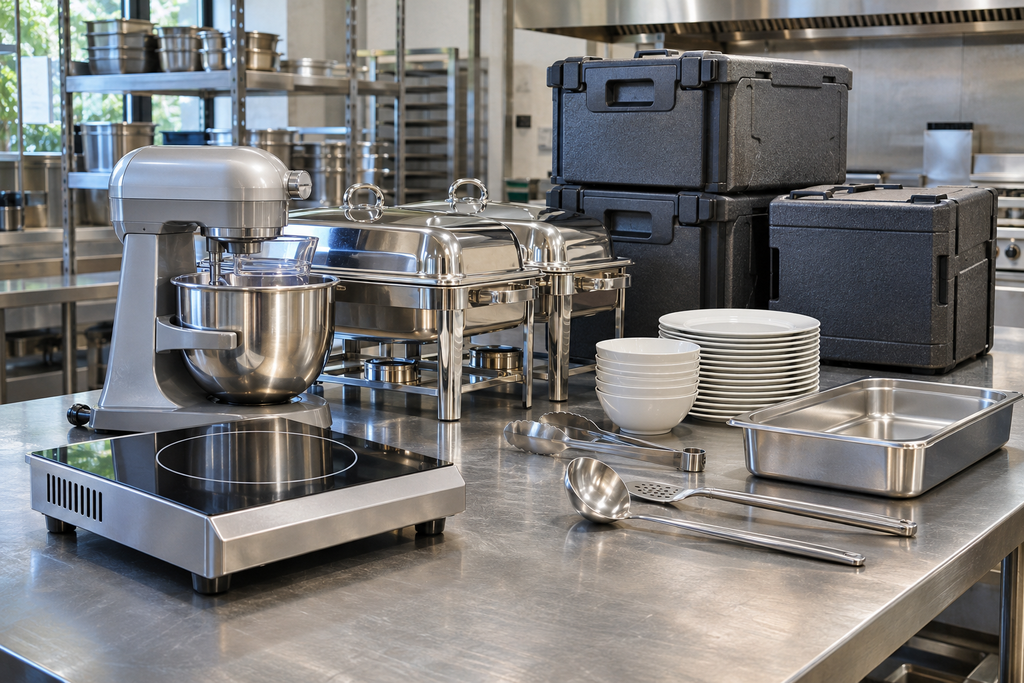
Business equipment insurance begins with a basic inventory question: what does the food business need to replace if its equipment is damaged or stolen? A restaurant, caterer or food producer may own machinery at the main premises, portable items used at events and equipment kept in a vehicle. Those locations and uses should be part of the insurance description.
This guide focuses on equipment as property: ownership, values, movement and settlement. Internal mechanical or electrical breakdown is a separate discussion. A mixer appearing on a contents list does not automatically establish coverage for every reason it stops working, just as breakdown cover does not answer every theft or transit question.
Build an equipment register that can be used
List major appliances, refrigeration, preparation tools, serving equipment, electronics and specialist installations. Record ownership, identifying details, approximate age and location. Include smaller items purchased in quantity rather than assuming only the most expensive machine matters to reopening.
Keep the register simple enough to update. Add invoices and photographs where available, and store copies outside the premises. If an event team takes equipment away, the person responsible should be able to identify what travelled and its approximate value without reconstructing the load after something goes missing.
Separate owned, financed and rented items
Equipment in your kitchen may belong to a landlord, supplier, lender or rental company. Explain those interests to the broker and provide the agreements. Responsibility for damage can differ from ownership, so possession alone should not decide what belongs in your insurance program.
Ask how property of others is treated and whether specific interests or values need to be recorded. A rental agreement can impose obligations beyond the policy wording. Have insurance requirements reviewed before hiring equipment for a major booking and obtain legal advice for wider contractual promises where appropriate.
Use appropriate replacement values
Discuss the settlement basis and relevant costs, including replacement, freight, installation and specialist labour. Original purchase price, resale value and the amount outstanding on financing are different figures. Ask which is relevant under the proposal instead of assuming the insurer will use the number most convenient to the business.
Review insurance-to-value provisions and whether professional estimates are needed for specialist equipment. A limit based on old used-equipment prices can be misleading if replacements must now be purchased and installed at current costs. Update values after material purchases and changes in the equipment market.
Identify the insured location
Ask whether equipment is covered only at the stated premises or also elsewhere. Explain shared kitchens, storage units, customer sites and temporary event locations. A fixed-location contents schedule should not be read as automatic worldwide protection for everything owned by the business.
Include seasonal storage and equipment left overnight at venues. Ask about relevant limits, territorial terms and theft conditions. Keep the addresses and maximum values clear so the quotation reflects the real operation, especially when several small items travel together to form one valuable event load.
Review transit and loading
Caterers and mobile food businesses regularly move equipment. Describe vehicles, carriers, loading methods and who handles the goods. Ask which arrangement addresses damage in transit and during loading or unloading. Vehicle insurance and the property carried should be discussed separately.
If a courier or hired carrier is involved, review the contract and insurance evidence without assuming it replaces your own protection. Keep dispatch and delivery records. A clear account of what moved, who controlled it and when damage was noticed is useful for both business recovery and a potential claim investigation.
Check theft and security conditions
Ask about unattended vehicles, keys, locks, alarms and overnight storage. Explain the practical arrangements staff use rather than describing an ideal process that cannot be followed during an event. Relevant conditions need to be understood by the people transporting and storing the equipment.
Set an escalation rule when parking or storage plans change. The event manager should know whom to contact before leaving a valuable load in a different location. Document the instructions and preserve relevant records if a loss occurs. Security remains important even where theft cover is purchased.
Distinguish accidental damage and breakdown
A machine can be dropped, stolen, damaged by an external event or fail internally. Ask how the proposed policies treat those causes separately. The phrase equipment insurance is not a complete explanation of which events, exclusions and deductibles apply.
Discuss breakdown protection for critical systems alongside warranties and maintenance contracts. Keep service history and ask what evidence should be retained after a failure. Ordinary wear, servicing and planned replacement should not be assumed to be insured losses, and a property inventory alone does not resolve that distinction.
Consider the effect of losing one essential item
A relatively modest piece of equipment can stop a much larger service operation. Ask about business interruption and extra expense options, including the qualifying events and any approval requirements. Repairing the asset and funding the financial disruption are different questions.
Identify temporary suppliers or rental alternatives before an incident. Ask which arrangements might be covered after a qualifying loss and what your business would retain. Maintain working capital for deductibles, urgent expenses and the time while coverage or settlement is being assessed.
Make the claim record practical
If equipment is damaged or missing, record identifying details, ownership, location and the event timeline. Preserve photographs, invoices and relevant contracts. Follow insurer reporting instructions promptly and ask before disposing of damaged parts or committing to major non-emergency repairs.
Keep repair, replacement and temporary hire costs separate. Do not assume a claim is settled because a quotation has been submitted. Ask the adjuster what further evidence is needed and maintain a clear record of communications so the manager arranging recovery understands the current position.
Use an equipment comparison checklist
- Assets, ownership and relevant financing interests.
- Replacement values and settlement basis.
- Main premises, storage and temporary locations.
- Transit, loading and security conditions.
- Insured causes, breakdown options and deductibles.
- Interruption, extra expense and claims procedures.
Review the register at renewal and after major changes. Ask for material differences between proposals in writing. The objective is a reliable picture of the assets insured, the circumstances in which protection applies and the costs the food business is prepared to fund itself.
Continue your coverage review
For the wider picture, read our hospitality insurance guide. Review Catering Insurance in Ontario: Off-Site Events, Equipment and Liability and Review Machinery Insurance for Commercial Kitchens: Breakdown and Repair Questions.
Explore Sterling’s restaurant insurance options or request a quote based on your operations.
General information only. Coverage depends on policy wording, exclusions, conditions and underwriting approval. Illustration generated for this article.