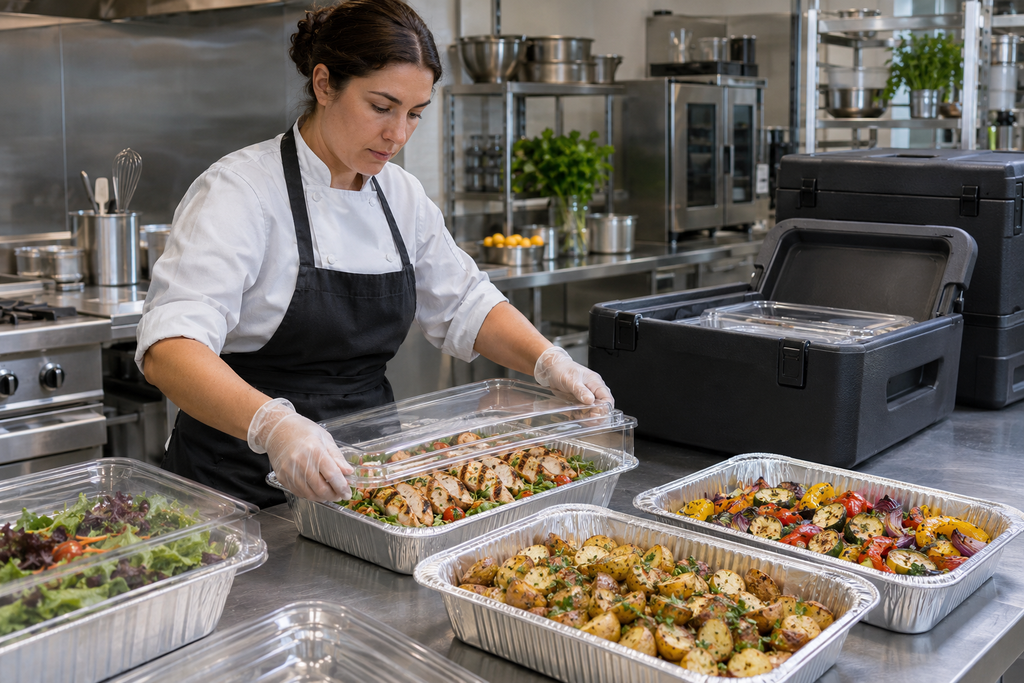
A caterer’s work moves between kitchens, vehicles and venues, often within the same day. A restaurant policy based only on a fixed address may leave important questions about off-site service, portable equipment and contracts unanswered. Catering insurance should follow the way your business prepares, transports and serves food, including the jobs that happen only a few times each year.
For Ontario caterers, a good insurance submission describes a complete event. Explain where preparation happens, who moves the food, which equipment travels and what your team does at the destination. A delivery-only lunch order differs from a wedding where your staff cook, serve and operate a bar for several hours.
Identify your role at each event
List the services offered: preparation, delivery, setup, cooking, serving, cleanup and equipment rental. Explain whether you work in a dedicated kitchen, shared commercial kitchen or another location. Include private homes, offices, outdoor events and larger venues where relevant. The business description should show what your staff actually do.
Clarify subcontractors and temporary staff. A venue may provide servers while you supply food, or your business may arrange the entire meal service. Ask how the insurance treats work performed on your behalf. Keep agreements and responsibilities clear so a last-minute staffing change does not become an assumption about who is insured.
Review liability for food and service
Commercial general liability can address covered allegations of injury or property damage arising from your operations. Discuss food-related allegations, spills, setup activities and work at client locations. Liability coverage is different from reimbursement for your own lost ingredients or a voluntary decision to replace an order.
Use event examples to test the proposal. What if a guest alleges illness after a meal? What if a staff member damages a venue fixture while carrying equipment? Ask how the relevant wording would be considered, including exclusions and defence arrangements. Hypothetical examples help frame questions; they do not guarantee a particular claim outcome.
Have venue contracts reviewed early
Venues commonly request evidence of insurance, limits or additional insured status. Give your broker the actual insurance clause before accepting it where possible. An event contract can contain obligations beyond the protection a standard policy provides. Obtain legal advice for indemnities and other contractual commitments that need interpretation.
Allow time for certificates and endorsements rather than requesting them while loading the van. Record the event date, venue, legal business names and exact requested wording. A certificate demonstrates existing insurance; it does not rewrite a policy to match every phrase in a contract.
Protect equipment away from your kitchen
Ovens, warming units, serving equipment, tableware and portable refrigeration can represent substantial value when transported together. Ask whether property coverage extends in transit, at temporary locations and overnight at venues. Explain who owns the equipment and who is responsible for rented or borrowed items.
Prepare a load inventory for larger events. Consider the maximum value travelling in one vehicle rather than the average value of individual items. Ask how theft, unattended equipment, breakage and loading are treated. Keep rental agreements and replacement information so both the quotation and a later loss report can use reliable facts.
Discuss the vehicle separately
Tell your broker who owns each delivery vehicle, who drives and how frequently it carries food or equipment. Commercial auto and non-owned vehicle arrangements require a separate discussion from customer liability. Personal vehicle insurance should not be assumed to address catering deliveries simply because the trip is short.
If vehicles are rented for busy weekends, explain that practice before the rental begins. Ask about damage to the rented vehicle, liability and the goods carried. A vehicle agreement, auto policy and property policy perform different jobs. Check each rather than expecting the rental counter’s basic description to settle the entire insurance position.
Review temperature and spoilage exposures
Food may depend on refrigeration before departure, suitable transport and equipment at the venue. Ask which causes of stock loss are insured and whether spoilage requires specific protection. An insured equipment breakdown, an external power failure and a delivery delay can raise different questions.
Maintain appropriate food safety procedures independently of insurance. Keep preparation, transport and temperature records suited to the operation. Decide who can reject unsafe stock and how the event manager reports a problem. If food must be discarded, preserve the relevant evidence and follow insurer instructions as well as applicable safety obligations.
Declare alcohol and special activities
If your team sells, serves or arranges alcohol, explain precisely what it does and discuss appropriate liquor liability. Do not assume host liquor wording fits a business providing paid bar service. Confirm licensing and other operating obligations through the appropriate authority; insurance does not authorize an activity.
Also mention outdoor cooking, unusual equipment, festivals and private events outside your normal service. Adding a distinctive service can create a useful sales opportunity, but the insurance description should be updated before the work is accepted. Keep event booking staff aware of which changes need review.
Consider cancellation and interruption carefully
A cancelled booking is not automatically a business interruption claim. Ask what insured event must occur, which financial loss is addressed and whether any separate event-related cover is available or appropriate. Do not promise clients that your insurance reimburses every cancellation reason.
Review your own terms for deposits, rescheduling and supplier commitments with the appropriate adviser. Identify expenses already committed before an event takes place. Maintain a continuity plan for kitchen or equipment disruption, and ask whether insured extra expenses could help you use a temporary arrangement after a covered loss.
Prepare an event insurance file
- Service description, venue address and event date.
- Contract and insurance requirements.
- Equipment ownership, values and rental agreements.
- Transport arrangements and driver details.
- Alcohol, cooking and subcontractor activities.
- Claims contacts and incident reporting instructions.
Keep the file accessible to the event lead. Record incidents promptly, preserve facts and avoid admissions or settlement promises without guidance. After the event, note any new activity or equipment issue that should affect the next review. A consistent file saves time when a venue, customer or insurer later asks what happened.
Build cover around your busiest booking
Bring your largest realistic event to the insurance conversation: the food volume, number of staff, equipment load and contractual responsibilities. If the program can be explained against that example, it becomes easier to identify what changes when you accept smaller jobs or expand into a new type of service.
Continue your coverage review
For the wider picture, read our hospitality insurance guide. Review Chef Insurance in Ontario: Private Dining, Pop-Ups and Client Kitchens and Review Business Equipment Insurance for Food Businesses: Contents, Transit and Values.
Explore Sterling’s restaurant insurance options or request a quote based on your operations.
General information only. Coverage depends on policy wording, exclusions, conditions and underwriting approval. Illustration generated for this article.