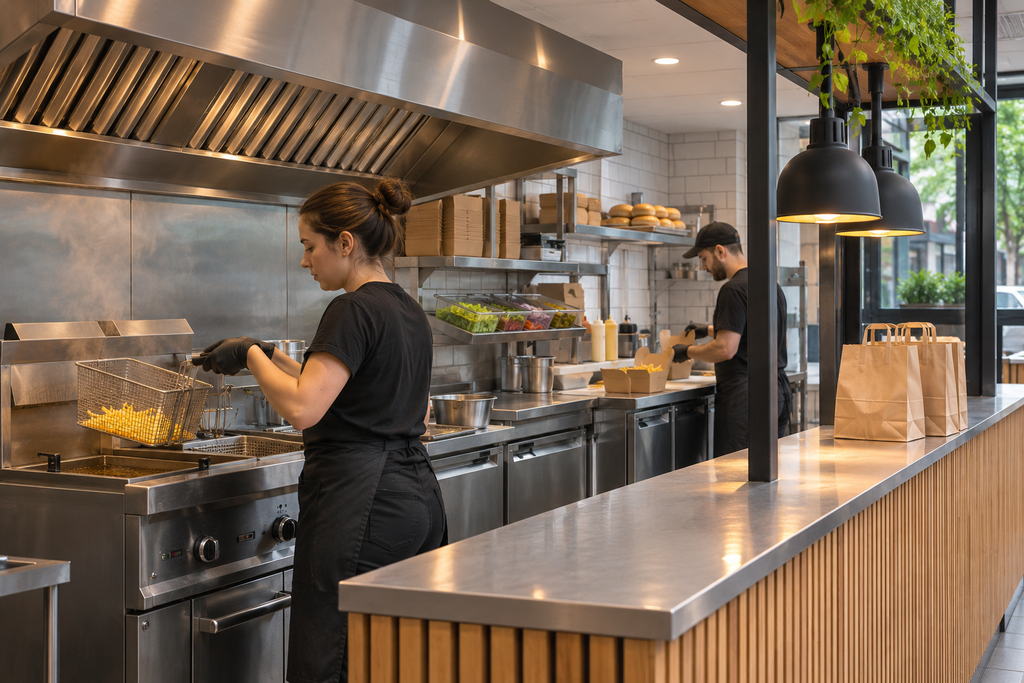
A fast-food or takeaway restaurant can have a compact dining area while operating a demanding kitchen for long hours. Fryers, extraction, refrigeration, delivery and rapid customer turnover create questions that floor area alone does not explain. Fast food restaurant insurance should be reviewed against the cooking process and service model, not simply the number of seats.
For Ontario operators, start with the menu and a typical busy shift. Explain where food is prepared, how orders are collected, who delivers and which equipment would stop service if unavailable. Include franchise or landlord requirements where relevant so the insurance discussion reflects the obligations already attached to the business.
Describe the kitchen accurately
List cooking methods, appliances, fuels and operating hours requested by the insurer. Explain deep frying, grilling, baking or reheating as applicable rather than grouping everything under food preparation. Include extraction and fire protection information and provide maintenance records when requested.
Describe any shared kitchen, virtual brand or separate operator using the premises. The business preparing the food may differ from the brand taking orders. Explain those relationships and obtain advice on the relevant contracts so responsibilities are not inferred from a customer-facing name alone.
Review property and improvements
Prepare an inventory of appliances, refrigeration, counters, furniture, signs, payment systems, stock and tenant improvements. Identify equipment owned, financed, leased or supplied by another party. Ask how property is valued and whether replacement and installation costs are adequately reflected.
A small shop can still have substantial specialist installations. Do not assume a modest rent or limited seating means a low contents value. Keep invoices and photographs accessible outside the premises and update the schedule after upgrades, removals or a change in ownership.
Ask focused fire questions
Discuss the insured causes of loss, deductibles and relevant conditions. Explain cooking systems and protection arrangements honestly. Insurance is separate from safe operation, inspections and maintenance; it should not be viewed as permission to postpone necessary cleaning or servicing.
Ask how damage to equipment, stock, improvements and rented premises would be considered after a kitchen incident. These are separate interests even if affected by the same event. Keep responsibility under the lease clear and seek legal advice on obligations that extend beyond the coverage wording.
Separate breakdown and spoiled ingredients
Refrigeration, extraction, control systems and preparation equipment can fail internally. Ask which equipment breakdown protection is included and what resulting losses are addressed. A machine listed as property is not automatically covered for every mechanical or electrical problem.
Review spoilage and external utility interruption separately, including relevant limits or waiting periods. Maintain appropriate temperature checks, alarm response and service records. If stock becomes unsafe, follow safety obligations and preserve suitable evidence rather than delaying action while reimbursement is uncertain.
Discuss food and customer liability
Commercial general liability can address covered allegations involving injury or property damage arising from operations or products. Explain food preparation, pickup counters, customer access and any seating. Ask how the proposed wording addresses food-related allegations and what exclusions matter.
Train managers to record complaints and incidents factually. Preserve relevant order information, inspection records and footage lawfully. Report promptly under insurer instructions without admitting liability or promising settlement. A fast service environment makes a clear procedure especially useful when several employees handle the same order.
Check delivery responsibilities
Tell the broker whether deliveries are made by employees, owners, contractors or platforms. Identify vehicle ownership and the work performed. Personal auto insurance and a platform’s arrangements should not be assumed to protect every restaurant-related vehicle exposure.
Ask which commercial auto or non-owned vehicle questions apply. Review the platform or contractor agreement and explain any separate delivery business. Keep the operation accurate when arrangements change, particularly if staff begin delivering after the original quotation described collection-only service.
Include online ordering and payment systems
Many takeaway kitchens rely on several order channels at once. Describe payment processing, customer information and access to business accounts. Ask about cyber and crime options relevant to the operation, including fraudulent payment instructions and employee dishonesty.
Use independent verification for supplier banking changes and unusual transfer requests. Limit system access appropriately and remove permissions when staff leave. Practical controls remain useful regardless of the insurance purchased, especially where rush periods encourage staff to follow informal instructions without checking.
Review franchise and landlord requirements
If the business operates under a franchise or other brand agreement, give the broker the actual insurance requirements. Include limits, additional insured requests and evidence wording. A standard certificate should not be assumed to satisfy every contractual clause.
Have wider indemnities and obligations reviewed by the appropriate legal adviser. Keep the final documents with the policy and update them when agreements change. The franchise brand, restaurant operator, landlord and equipment owner can have different interests even when customers see one business.
Plan for a covered service interruption
Ask what triggers business interruption, how the financial loss is calculated and how long protection continues. Review waiting periods and limits against realistic repair and equipment lead times. A platform outage, cancelled order or poor sales period is not automatically an insured interruption.
Consider whether a reduced menu, hired equipment or another kitchen could support temporary trading after a covered event. Ask about extra expense protection and consent requirements. Maintain working capital for deductibles, retained costs and the time while the reported claim is assessed.
Use a quick-service insurance checklist
- Menu, cooking equipment, hours and protection systems.
- Legal business, brands and shared-kitchen arrangements.
- Property ownership, improvements and current values.
- Food liability, delivery and online ordering.
- Lease, franchise and contractor requirements.
- Breakdown, spoilage, interruption and deductible choices.
Compare quotations using the same facts and ask for material conditions in writing. Review the program before adding another brand, extending hours or changing delivery arrangements. A useful policy review should explain both the protection available and the costs the business intends to retain.
Continue your coverage review
For the wider picture, read our hospitality insurance guide. Review Food Truck Insurance in Ontario: Vehicle, Kitchen and Event Coverage and Review Fire Insurance for Restaurants: Kitchen Damage, Cleanup and Reopening.
Explore Sterling’s restaurant insurance options or request a quote based on your operations.
General information only. Coverage depends on policy wording, exclusions, conditions and underwriting approval. Illustration generated for this article.