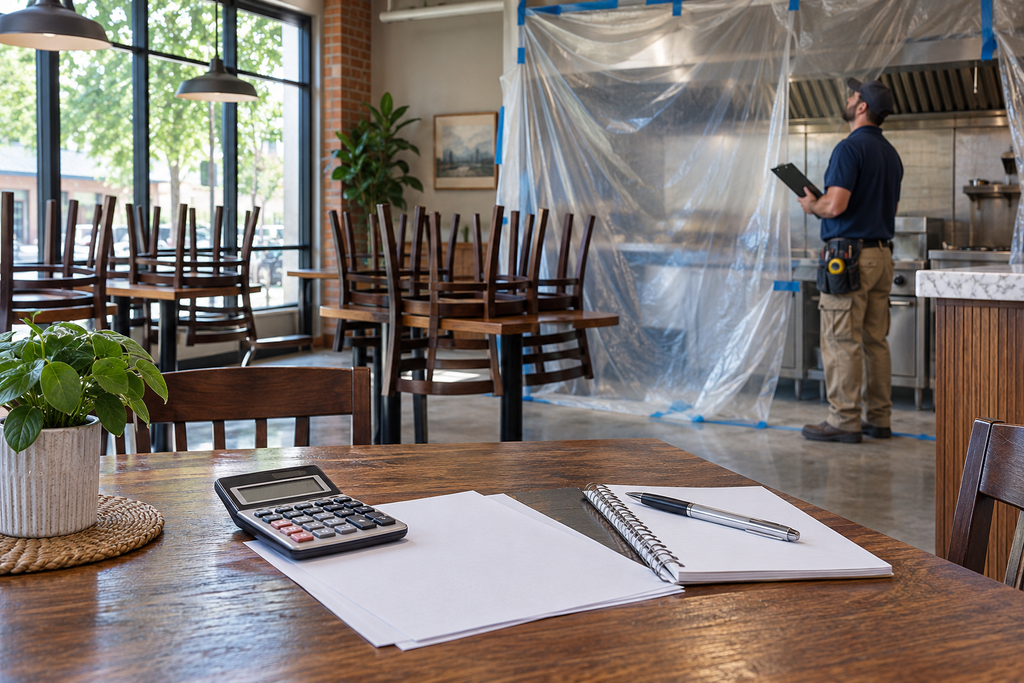
Replacing a damaged oven does not necessarily restore a restaurant’s income. Repairs, equipment orders, inspections and reopening work can continue after the initial emergency has passed. Business interruption insurance addresses specified financial losses following a qualifying insured event, but the wording determines the trigger, calculation and period of protection.
For an Ontario restaurant, the useful question is how the cover fits a realistic recovery. Begin with the event that stops trading, then list continuing expenses, reduced sales and possible temporary arrangements. A headline limit alone cannot show whether the program matches the time and money needed to reopen.
Start with the coverage trigger
Ask what must happen before business interruption responds. Many arrangements connect the financial cover to insured property damage or another defined event. A temporary closure for any reason is not automatically covered. Read the relevant wording and extensions instead of relying only on the phrase loss of income.
Use practical examples with your broker: a covered kitchen fire, internal equipment failure, external power outage or damage at a supplier. These can involve different questions and extensions. The purpose is to understand the proposal, not to assume every example produces a paid claim.
Understand what financial loss is measured
Ask how the policy calculates the insured loss and which records support it. Sales, gross profit, continuing expenses and saved costs can matter differently depending on the form. Do not assume the insurer simply replaces every dollar of missing revenue or pays the full value of cancelled bookings.
Give the broker accurate financial information and explain seasonal patterns. A restaurant with busy summer patio trade or holiday events should not rely on a quiet-month average without discussion. Ask an accountant to help prepare records where necessary so the figures used in the insurance review are consistent and understandable.
Choose an indemnity period realistically
The period of protection needs review alongside the likely recovery timeline. Ask when it begins, when it ends and whether cover can continue after physical repairs while the business returns to the level described by the wording. Different policy forms can address the period differently.
Estimate time for investigation, design, contractors, equipment delivery and required approvals. A specialist kitchen may not be restored as quickly as a small office. Discuss those assumptions before choosing the period rather than discovering during a claim that reopening takes longer than the arrangement anticipated.
Review waiting periods and limits
Ask whether a waiting period applies and which limits or sublimits affect the loss. Check whether separate extensions, such as utility interruption, use different conditions. The amount shown beside business interruption should not be assumed to apply unchanged to every type of interruption.
Keep a comparison sheet with the trigger, financial basis, period, waiting terms and material exclusions. Ask the broker to explain differences in writing. Two proposals can have similar premiums while offering different protection, particularly when one includes an extension the other leaves out.
Test a partial shutdown
A restaurant may remain partly open after losing a kitchen area, dining section or refrigeration system. Ask how reduced operations are treated and what records demonstrate the effect. Temporary takeout service, reduced opening hours and cancelled events can complicate a simple before-and-after sales comparison.
Keep daily sales, staffing and expense records during the interruption. Record decisions and reasons without assuming every operational choice is reimbursable. Coordinate with the adjuster about information needed so temporary measures and changing circumstances can be understood when the loss is assessed.
Ask about extra expenses
Hiring equipment, using another kitchen or arranging a temporary service can help keep customers. Ask whether extra expense protection is included, how it is limited and what consent requirements apply. Do not assume a sensible business decision automatically qualifies as an insured expense.
Discuss alternatives before an incident where possible. Identify suppliers, available kitchens and equipment lead times. After a loss, keep quotations, invoices and approvals together. Separating ordinary expenses from additional recovery costs makes it easier for the business and insurer to understand the financial record.
Connect breakdown and utility questions
Equipment breakdown and external power interruption can stop trading without a building fire. Ask how the interruption arrangement connects to those events and whether specific extensions are required. Insuring equipment repair does not automatically establish protection for every resulting income loss.
Explain critical systems, including refrigeration, extraction and payment equipment. Ask about the treatment of off-premises utility damage and any distance, cause or waiting conditions relevant to the wording. Keep maintenance responsibilities clear, because ordinary wear and planned replacement remain business matters.
Review suppliers, neighbours and access
A restaurant can be affected by damage elsewhere, including a supplier or neighbouring premises. Ask whether contingent interruption, prevention of access or other relevant extensions are available and what their exact triggers require. A delivery delay or access restriction should not be assumed to fall within the policy.
Identify dependencies you could reduce operationally. Alternative suppliers, backup communication and a realistic customer contact plan are useful even if no insurance extension applies. Record which decisions concern insurance transfer and which concern the restaurant’s own continuity planning.
Prepare records before a claim
Keep sales reports, financial statements, payroll, supplier invoices, leases and booking records organized. Store copies where they remain accessible if the restaurant cannot be entered. Ask the broker what information is useful for both underwriting and a potential interruption claim.
After an incident, track continuing expenses, savings, extra costs and changes in trading separately. Preserve the factual timeline and communicate regularly with the adjuster. Avoid promising an exact settlement or timetable before coverage and the financial calculation have been reviewed.
Use a recovery worksheet at renewal
- Qualifying event and relevant policy section.
- Likely repair and equipment replacement timeline.
- Continuing costs, seasonal sales and financial basis.
- Waiting periods, limits and indemnity period.
- Temporary arrangements and approval requirements.
- Records, reporting contacts and retained cash needs.
Review the worksheet after renovations, expansion or a change in the restaurant’s sales pattern. Maintain working capital for deductibles and uninsured expenses. Business interruption works best as part of a wider recovery plan that explains both the protection purchased and the costs the business must fund itself.
Continue your coverage review
For the wider picture, read our hospitality insurance guide. Review How Long Does a Business Insurance Claim Take? A Restaurant Owner’s Timeline and Review Machinery Insurance for Commercial Kitchens: Breakdown and Repair Questions.
Explore Sterling’s restaurant insurance options or request a quote based on your operations.
General information only. Coverage depends on policy wording, exclusions, conditions and underwriting approval. Illustration generated for this article.