Many restaurant owners assume that having business insurance means everything inside their restaurant is protected. That assumption can become expensive when a refrigerator breaks down, a customer makes a food-related illness claim, or a kitchen fire forces the business to close.
Restaurant insurance can help protect your business against covered property damage, liability claims and interruptions to your operations. However, the protection you receive depends on the coverages included in your policy.
Whether you operate a neighbourhood restaurant, bakery, café or licensed bar, understanding your insurance before something happens can help you avoid unexpected expenses.
What Is Restaurant Insurance?
Restaurant insurance is a combination of commercial insurance coverages designed around the risks of preparing food, serving customers and operating a food service business.
A restaurant business insurance package may combine property insurance, liability protection and optional coverages for equipment breakdown or food spoilage. Sterling Insurance Brokers’ restaurant insurance page identifies these among the risks its restaurant package addresses. Sterling Insurance Brokers Ltd
Businesses that should discuss their operations with a restaurant insurance broker include:
- Full-service restaurants
- Fast-food and takeout restaurants
- Cafés and coffee shops
- Bakeries and dessert shops
- Bars and pubs
- Catering and meal preparation businesses
- Franchise restaurants
- Delivery-focused kitchens
Your menu, cooking equipment, alcohol sales and delivery services all help determine which coverage to consider.
What Does Restaurant Insurance Cover?
Commercial restaurant insurance may include several separate types of protection.
| Coverage | What to review with your broker |
|---|---|
| Commercial general liability | Customer injuries and third-party property damage |
| Product liability | Claims involving food or beverages you sell |
| Commercial property | Equipment, furnishings, stock and insured building interests |
| Business interruption | Income losses following an insured event |
| Equipment breakdown | Covered mechanical or electrical breakdowns |
| Food spoilage | Covered losses involving refrigerated or frozen stock |
| Liquor liability | Risks associated with serving alcohol |
| Commercial auto | Vehicles used for business operations |
These coverages are not automatically included in every policy. The Insurance Bureau of Canada recommends identifying your business’s risks and reviewing the specific insurance needed for property, liability, machinery and vehicles. ibc.ca
Restaurant General Liability Insurance
A customer slipping near your entrance can lead to more than an uncomfortable conversation. If an injury results in a claim, your restaurant may face legal expenses and a demand for compensation.
Restaurant general liability insurance generally addresses covered claims alleging bodily injury or property damage to others. It can also cover legal defence costs, subject to the policy’s terms. ibc.ca
When reviewing restaurant liability insurance, discuss:
- Customer access and seating areas
- Patios and outdoor dining
- Catering at third-party locations
- Events hosted at your premises
- Lease requirements for liability limits
- Any requirement to name your landlord as an additional insured
For example, adding a seasonal patio changes how customers use your premises. Tell your broker before opening it.
Food-Related Illness and Product Liability
Food service businesses should review what happens if a customer alleges that a meal or drink caused illness.
Product liability coverage may respond to covered bodily injury claims involving products your business supplies. TruShield specifically identifies sickness caused by food or beverages as a potential product-related liability exposure. TruShield Insurance
For insurance for restaurants, describe how you prepare and sell food:
- Meals served on-site
- Takeout orders
- Catering
- Packaged products
- Online food sales
- Allergen-sensitive or specialty menus
Do not assume that a policy arranged for a dine-in restaurant automatically addresses a new packaged-food business.
Commercial Property and Fire Insurance for Restaurants
Your kitchen contains equipment that may be expensive to replace. Your dining room, inventory and leasehold improvements also represent money invested in the business.
When arranging commercial insurance for restaurants, ask your broker to review:
- Ovens, fryers and cooking equipment
- Refrigerators and freezers
- Tables, chairs and furnishings
- Point-of-sale equipment
- Food and beverage inventory
- Renovations and tenant improvements
- Building coverage, if you own the property
Commercial property insurance protects insured property against covered causes of loss. The policy determines which events are covered and how claims are valued. ibc.ca
If you are comparing fire insurance for restaurants, check more than the equipment limit. Ask how the policy treats renovations, cleanup expenses and the time needed to reopen.
Equipment Breakdown and Food Spoilage
A failed walk-in refrigerator can create two separate expenses: repairing the equipment and replacing the food inside it.
Ask whether your restaurant insurance includes:
- Equipment breakdown coverage
- Food spoilage coverage
- Applicable deductibles
- Stock limits during peak periods
- Coverage conditions relating to power failures
- Maintenance or inspection requirements
Sterling’s restaurant insurance offering identifies equipment breakdown and food spoilage as coverage areas to discuss. Confirm how these apply to your equipment and stock before purchasing a policy. Sterling Insurance Brokers Ltd
Keep an updated equipment list and review your maximum inventory value, especially before holidays or large catering orders.
Business Interruption Insurance
Repairing a damaged restaurant does not immediately replace the income lost while its doors are closed.
Business interruption insurance may help address covered income losses following an insured event. Coverage generally requires a qualifying trigger, often covered physical loss or damage, and applies according to the policy’s limits and indemnity period. It does not cover every reason a restaurant might close. chubb.com
Ask your broker:
- What events trigger the coverage?
- Is there a waiting period?
- How is lost income calculated?
- Which continuing expenses are covered?
- How long can benefits continue?
- Does the coverage allow enough time to repair and reopen?
Think about the practical recovery timeline. Replacing specialist kitchen equipment or completing repairs may take longer than expected.
Restaurant Insurance Ontario
When comparing restaurant insurance in Ontario, start with how your business operates rather than choosing a package by name.
Prepare information about:
- Your address and building
- Annual revenue
- Seating capacity
- Cooking methods
- Equipment values
- Alcohol service
- Delivery and catering
- Previous claims
- Landlord or franchise insurance requirements
A small takeout restaurant and a late-night licensed venue should not be assessed as though their operations are identical.
For restaurant insurance Toronto searches, the same principle applies: give the broker details about your actual premises, activities and contractual requirements.
Bar and Restaurant Insurance
Serving alcohol adds another exposure to discuss when arranging bar and restaurant insurance.
Tell your broker whether alcohol is served with meals, at a dedicated bar, during private events or alongside entertainment. Hospitality insurance packages may address liquor-related exposures, but the specific coverage must be confirmed. Zensurance
When reviewing a bar insurance policy, provide details about:
- Alcohol sales as a share of revenue
- Opening and closing times
- Live music or entertainment
- Security arrangements
- Private functions
- Staff training
- Any changes to the business model
Coverage arranged for a restaurant should be reviewed before introducing a nightclub-style operation or regular late-night events.
Café and Coffee Shop Insurance
Café insurance and coffee shop insurance should reflect more than the size of your dining area.
A coffee shop might operate with espresso machines, refrigerated products and light food preparation. Another may roast coffee, bake on-site or cater events.
When requesting business insurance for a coffee shop, list each activity clearly. Ask about equipment, stock, customer liability and the financial effect of an interruption.
The same approach applies to coffee shop insurance cost: compare quotes using consistent equipment values, coverage limits and deductibles.
Bakery Insurance
A bakery’s insurance needs can change depending on whether it sells directly to customers, supplies other businesses or operates from a home kitchen.
When arranging bakery business insurance or baking business insurance, discuss:
- On-site baking and cooking
- Ovens, mixers and refrigeration
- Custom cake orders
- Wholesale supply
- Delivery
- Market stalls
- Packaged products
If you are searching for insurance for a baking business, describe the complete operation. A home-based baker supplying occasional orders has a different business profile from a commercial bakery producing wholesale stock.
Brewery and Winery Insurance
Brewery insurance, craft brewery insurance and winery insurance require a discussion about production as well as customer service.
If your restaurant also brews beer or produces wine, tell your broker about:
- Production equipment
- Ingredients and finished stock
- Storage
- Bottling or packaging
- Distribution
- Tastings
- Tours and events
Ask whether a specialist brewery and winery insurance program is appropriate. Do not assume a restaurant policy extends to manufacturing activities without review.
Restaurant Insurance Cost
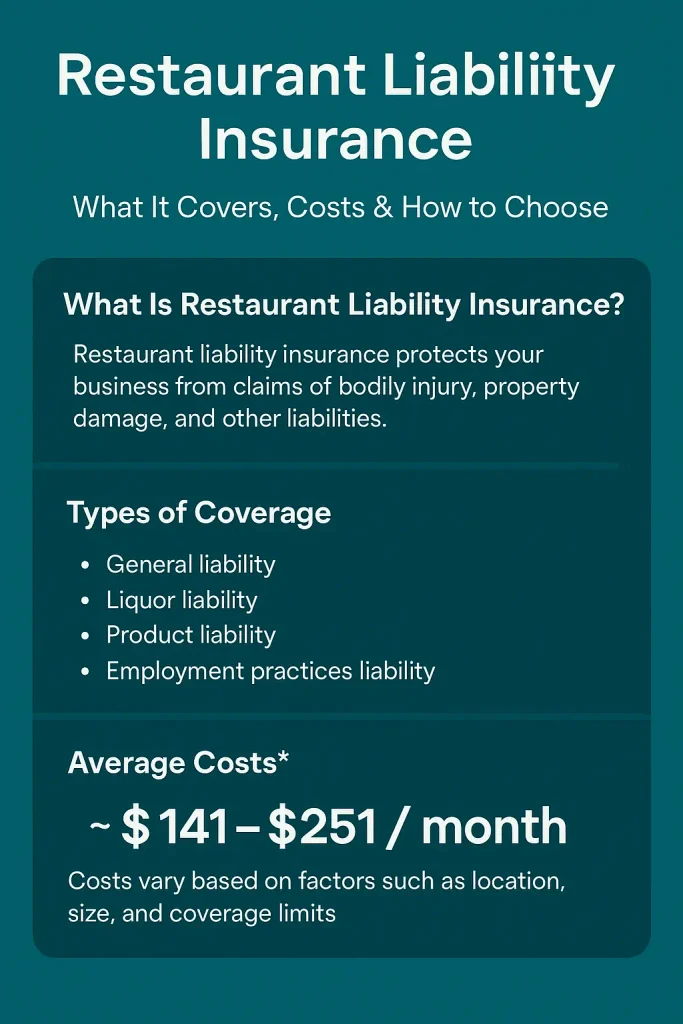
How much does restaurant insurance cost? There is no single premium that accurately represents every restaurant.
Factors used to assess restaurant insurance cost can include the type of business, location, revenue, property values, selected coverage and claims history. Insurers assess the actual operation when preparing a quote. Erie Mutual Insurance
When comparing the average insurance cost for a restaurant with your own quote, check whether the businesses and coverage are comparable.
A price advertised for a small café may not reflect the insurance needed for a full-service restaurant with alcohol sales, expensive equipment and catering operations.
How Much Is Restaurant Insurance Per Month?
Ask for both the annual premium and the total cost of any monthly payment arrangement.
Confirm:
- Whether payment fees apply
- The deductibles
- Property and liability limits
- Optional coverages included
- Any exclusions affecting your operations
The lowest monthly payment may leave important risks uninsured.
How to Get a Restaurant Insurance Quote
To request a restaurant insurance quote, prepare:
- Business name and address
- Years in operation
- Estimated annual revenue
- Description of your menu and cooking methods
- Alcohol sales information
- Building and equipment details
- Inventory values
- Delivery, catering and event activities
- Claims history
- Existing insurance documents
- Lease or franchise requirements
When requesting restaurant insurance quotes online, provide the same information to each broker so the proposals are easier to compare.
Ask for a written explanation of the coverage, deductibles and significant exclusions.
How to Manage Restaurant Insurance Costs
Discuss practical risk controls with your broker:
- Keep equipment maintenance records.
- Maintain kitchen cleaning schedules.
- Record refrigeration temperatures.
- Address spills and trip hazards promptly.
- Train staff on food handling and incident reporting.
- Review equipment and inventory values regularly.
- Report changes in operations before they begin.
Ask whether these measures affect insurer eligibility or pricing. A discount is not guaranteed.
Before increasing a deductible to reduce the premium, consider whether your business could comfortably pay that amount after a loss.
Frequently Asked Questions
What is restaurant insurance?
Restaurant insurance combines commercial coverages selected for a food service business. The package may address liability, property, equipment and interruption risks, depending on its terms.
Do restaurants need insurance?
Insurance helps manage financial exposure, and leases, lenders or franchise agreements may require specific coverage. Ask your broker which requirements apply to your business rather than assuming every restaurant has identical obligations.
Does restaurant insurance cover food poisoning?
A covered food-related illness claim may fall under product liability protection. Ask your broker to confirm the applicable wording, limits and exclusions.
Does restaurant insurance cover broken refrigerators?
Equipment breakdown coverage may respond to a covered breakdown. Food lost as a result may require spoilage coverage. Confirm both protections rather than assuming one covers the other.
What is the best restaurant insurance?
The best restaurant insurance fits your operations, assets, contractual requirements and ability to absorb a loss. Compare coverage and claims conditions alongside price.
Get Restaurant Insurance With Sterling Insurance Brokers
Your insurance should reflect the business you run today. Adding alcohol service, buying equipment or expanding into catering is a reason to review your coverage.
Sterling Insurance Brokers can help you discuss your restaurant’s insurance needs and review protection for the risks identified in its restaurant insurance offering. Sterling Insurance Brokers Ltd
Explore restaurant insurance with Sterling Insurance Brokers and request a quote for your business.
Coverage is subject to policy terms, conditions, limits and exclusions.