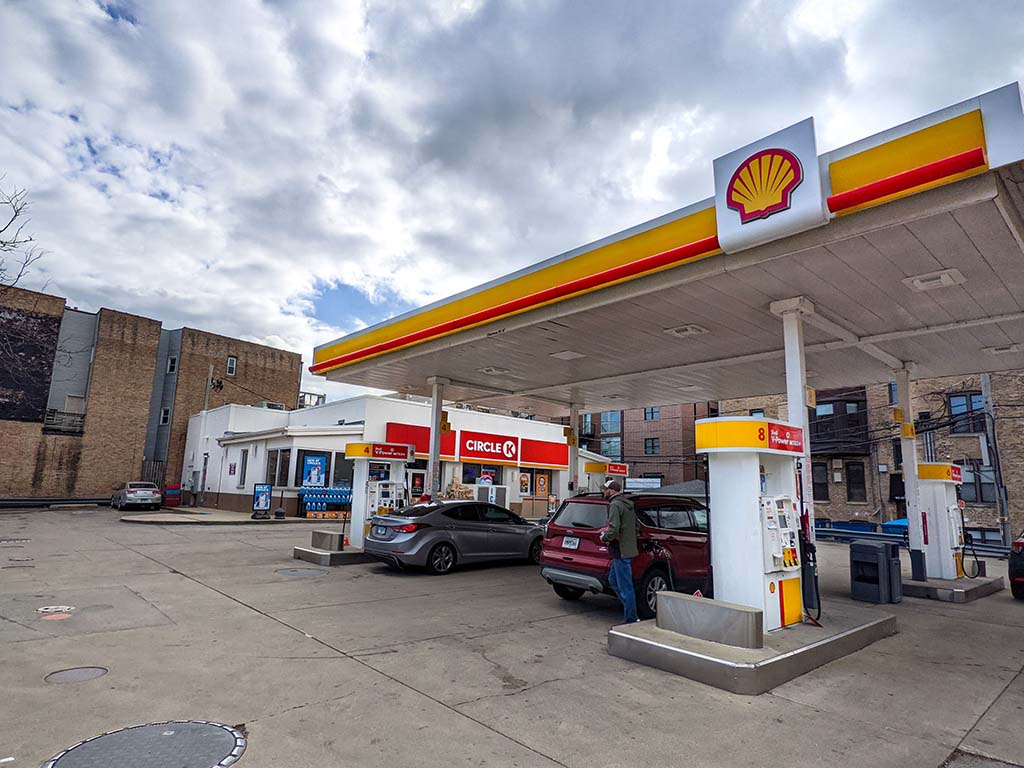
A gas station forecourt brings vehicles, customers, fuel deliveries and employees into the same space. Liability risk can arise from how that space is maintained, the services offered and the responsibilities accepted in contracts. Gas station liability insurance should therefore be reviewed against the actual site rather than a generic description of a business selling fuel.
For Ontario owners and operators, the review should identify ordinary premises exposures, service-related risks and environmental questions separately. The examples in this guide are discussion tools. Whether any particular claim is covered depends on the facts, legal liability and the wording of the insurance arranged.
Start with a customer walk-through
Trace a customer’s route from the entrance to a pump, into the store and back to their vehicle. Note crossing points, changes in surface, lighting and areas where vehicles reverse or queue. Identify who is responsible for each area, especially where a landlord, shared property manager or independent operator is involved.
Give the broker a clear description of the layout and responsibilities. Keep inspection and maintenance routines practical enough for staff to follow during busy periods. Records of what was checked and corrected are more useful than a written procedure that nobody uses. Review the process after seasonal changes or alterations to traffic flow.
Premises injury allegations
Commercial general liability can address covered allegations of bodily injury or property damage arising from the business. A visitor who reports a fall near the store entrance is one example to discuss. The allegation itself does not establish the operator’s responsibility or guarantee the insurer’s response.
Ask about the relevant limits, exclusions and handling of defence costs. Explain winter maintenance arrangements, cleaning, deliveries and any shared access. If another party performs maintenance, keep the agreement and service records. Insurance and contracts should be reviewed together so responsibility is not assumed based solely on who usually completes a task.
Vehicle movement and forecourt activity
Distinguish premises operations from ownership or use of vehicles. If staff move company vehicles, operate a delivery vehicle or perform other driving tasks, discuss the appropriate auto arrangement. General liability should not be assumed to replace automobile insurance simply because the movement occurs on private property.
Review signage, pedestrian routes and procedures for fuel deliveries with the appropriate operational advisers. Tell the broker about unusual arrangements such as commercial fleet fueling, large vehicle traffic or services involving customer vehicles. These details can change the questions that need to be answered before coverage is selected.
Products and services sold at the site
A convenience store, food counter, car wash or propane-related service can create exposures beyond fuel retailing. Describe each activity and ask how product and operational liability are addressed. If staff prepare food, the discussion should include that fact rather than describing every sale as packaged retail merchandise.
When an independent concession operates inside the store, clarify whose business it is and what agreements govern it. Request suitable evidence of insurance and have the insurance clauses reviewed. Shared customers and branding do not automatically mean the concession’s work is covered under your policy or that its insurer will protect your business.
Customer vehicles and property in your care
A site providing washing, maintenance or another vehicle service should ask specifically about damage to customer property. Policies may distinguish ordinary third-party property damage from property in the insured’s care, custody or control. The relevant service and wording need review rather than a broad assurance that liability is included.
Describe exactly what employees do, whether customers remain in their vehicles and which equipment is used. Keep complaint reporting procedures factual and consistent. A manager should know how to preserve records and contact the broker without promising repairs or accepting responsibility before the matter has been investigated.
Pollution liability deserves a separate worksheet
Fuel releases can involve cleanup, neighbouring property and allegations of injury or environmental damage. Ask how the proposed environmental coverage addresses those exposures. Ordinary general liability and property insurance should not be treated as confirmation that all pollution-related costs are insured.
Discuss tanks, lines, fuel deliveries, historical site use and available environmental information. Ask about gradual releases, existing conditions and reporting requirements. Record the broker’s explanation of the actual wording offered. The environmental review is especially important when buying a site or changing the entity that operates it.
Contracts can create additional obligations
Fuel supply agreements, leases and service contracts may require liability limits, additional insured status or indemnities. Provide the actual wording before signing where possible. A certificate is evidence of insurance, but it does not expand the policy or make every contractual promise insurable.
Separate insurance review from legal review. A broker can explain available coverage and evidence; a legal adviser can assess obligations you are being asked to accept. Keep approved versions of agreements together so future managers do not rely on an outdated clause or a verbal description of who is responsible.
Choose limits with the operation in mind
Discuss per-occurrence and aggregate limits, relevant sublimits and the treatment of defence expenses. Explain the scale of the site, services and customer traffic instead of selecting a number only because it appears in another operator’s policy. Contractual minimums should be reviewed alongside the potential exposure.
Ask whether excess liability options are relevant and how they interact with underlying policies. If more than one insurer is involved, request a clear explanation of the arrangement. The purpose is to understand the structure and any gaps, not simply to add policy limits together without checking the wording.
Train managers to preserve facts
- Attend to immediate safety and obtain appropriate assistance.
- Record the time, location and factual account of the incident.
- Preserve relevant photographs, inspection records and footage lawfully.
- Notify the designated manager and insurer under reporting instructions.
- Avoid admissions, settlement promises and speculation.
- Keep related correspondence and expenses organized.
If fuel or another hazardous substance is involved, follow applicable emergency procedures and reporting obligations. Insurance notification is not a replacement for an appropriate safety response. Make sure the manager on every shift knows the relevant contacts and has access to the current instructions.
Review after changes, not only at renewal
Adding a car wash, changing a food offering or altering site traffic can change the business description. Tell the broker before substantial changes begin. Update contracts and internal procedures at the same time so the insurance discussion and daily management reflect the same operation.
Explore Sterling’s gas station insurance options and request a liability review. Bring a site description, contracts and environmental records to support a practical discussion.
General information only. Coverage depends on policy terms and underwriting. Background: pollution liability overview.