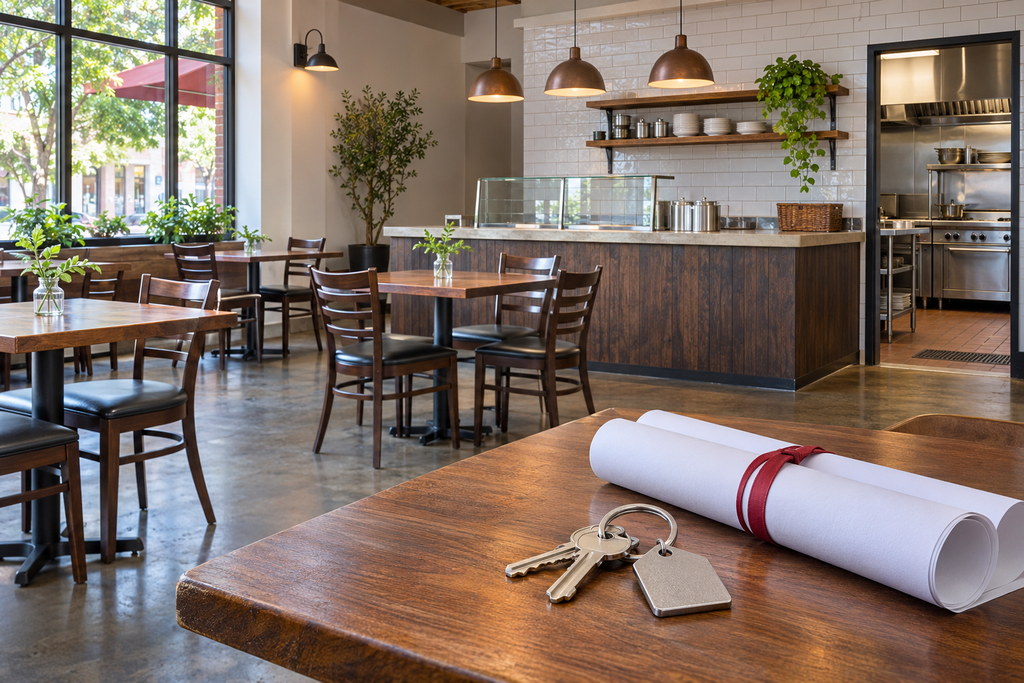
A restaurant can rent its premises and still be responsible for substantial property and liability exposures. Commercial tenant insurance is the discussion about those responsibilities: your contents, improvements, customer activities and potential liability to a landlord. The building owner’s insurance should not be assumed to protect the restaurant’s whole operation.
For an Ontario restaurant tenant, start with the lease rather than a generic contents estimate. It explains which parties accept particular duties, although insurance advice and legal interpretation serve different roles. Give the final document to the appropriate advisers before relying on a certificate or promising that a particular loss is covered.
Identify the tenant and the insured business
Check which legal entity signs the lease, operates the restaurant and owns the equipment. Include the operating name and relevant locations in the insurance discussion. A company name change, asset purchase or new ownership structure can matter even when the restaurant sign and address remain unchanged.
Explain the possession date, opening date and any renovation period. Insurance needs can begin before the first meal is sold. If equipment arrives while work is unfinished, clarify who is responsible for it and what arrangement applies. Do not assume an operating restaurant quotation automatically addresses every construction-stage exposure.
Read the insurance clause in full
Highlight required liability limits, additional insured requests and evidence requirements. Include notice provisions and any unusual wording the landlord expects. Ask the broker which requirements can be addressed under the proposed insurance, and have a lawyer review contractual obligations that extend beyond coverage.
A certificate demonstrates an insurance arrangement; it does not rewrite exclusions or insure every promise in the lease. Resolve wording early rather than waiting for the day keys are handed over. Keep the approved requirement and the final evidence together so future renewals use the correct version.
Separate building, contents and improvements
List kitchen equipment, furniture, stock, signs, electronics and fitted improvements for which your business is responsible. Counters, flooring and alterations may have different ownership or repair arrangements. Explain improvements installed by previous tenants instead of assuming their history makes responsibility obvious.
Ask how property is valued and whether current replacement and installation costs are reflected. A restaurant’s contents can cost much more to replace than the sum originally paid for used equipment. Clarify insurance-to-value conditions and any relevant settlement basis before choosing a limit.
Understand tenants’ legal liability
Liability for damage to rented premises is a separate question from insuring your own improvements. Ask how the proposed policy addresses tenants’ legal liability and which limits, causes of loss or exclusions apply. The answer should be tied to the actual wording and lease obligations.
Consider an illustrative kitchen incident affecting both your equipment and the landlord’s property. The two losses need separate analysis even if they arise together. Ask how reporting would be coordinated, and do not assume that payment under one section automatically establishes responsibility or coverage under another.
Clarify shared spaces and maintenance
Entrances, stairs, patios, parking and waste areas may be maintained by different parties. Identify who controls each area and who arranges cleaning or winter maintenance. Customer liability should be discussed against those responsibilities rather than a simple assumption that everything outside the unit belongs to the landlord.
Keep service contracts and inspection records where managers can find them. If a customer reports an incident, preserve facts and follow reporting instructions without admitting liability or promising settlement. Accurate records help the appropriate parties investigate what happened and whose duties are relevant.
Review equipment supplied by the landlord
Ventilation, heating, refrigeration and other systems can be owned or maintained by someone else while remaining essential to your sales. Ask who must repair them, how equipment breakdown is addressed and what happens to your stock or income if the system fails.
The landlord’s maintenance obligation does not automatically provide cash for your spoiled food or interrupted trading. Discuss your own spoilage and business interruption questions, including relevant utility or equipment extensions. Keep reporting contacts and approval procedures clear before an urgent repair is needed during service.
Plan for insured damage and reopening
Ask what triggers business interruption and how the financial loss is calculated. Review waiting periods, limits and the indemnity period against realistic recovery time. Repairs may depend on the landlord, specialist equipment, contractors and required approvals, so reopening can involve more than replacing visible damage.
Consider temporary kitchens or alternative service arrangements and ask how extra expenses are treated. Maintain records of sales and continuing costs. A lease’s rent obligations and the business interruption wording should be reviewed separately; insurance should not be assumed to reimburse every payment due during any closure.
Tell the broker about renovations and changes
Adding cooking equipment, changing extraction, expanding into another unit or building a patio can change both contractual and insurance responsibilities. Discuss planned work before it begins. Identify contractor arrangements, materials and periods when the premises may be vacant or partly operational.
After work is completed, update property values and the business description. Retain invoices and final agreements rather than leaving the review at the quotation stage. A policy based on the original layout may be difficult to assess once the operation and replacement costs have changed substantially.
Choose deductibles using available cash
Ask for the deductible applicable to each material coverage instead of assuming one figure applies to every event. Water damage, equipment and other sections may have different terms. Compare alternatives where available using the amount your business could fund during an interruption.
A modest premium saving can be less useful if the retained loss prevents essential repairs. Keep reserves for deductibles and costs outside the policy. Ask the broker to explain material exclusions and outstanding conditions in writing, especially where they affect the restaurant’s ability to satisfy the lease.
Prepare a tenant insurance file
- Final lease, amendments and legal business names.
- Possession, renovation and opening dates.
- Equipment ownership and improvement values.
- Shared-space and maintenance responsibilities.
- Required limits and additional insured wording.
- Breakdown, spoilage, interruption and deductible decisions.
Review the file at renewal and before agreeing to material lease changes. Keep insurance evidence with the policy and explanations that support it. The result should be a clear account of your responsibilities, the protection arranged and the expenses the restaurant intentionally retains.
Continue your coverage review
For the wider picture, read our hospitality insurance guide. Review Commercial Property Insurance in Ontario: A Restaurant Owner’s Guide and Review How to Choose Business Insurance for a Restaurant or Café.
Explore Sterling’s restaurant insurance options or request a quote based on your operations.
General information only. Coverage depends on policy wording, exclusions, conditions and underwriting approval. Illustration generated for this article.